Career

Research and methodology

Over six years of applied research, particularly in support of public decision-making, and a consistent work methodology across projects.

This career summary is not exhaustive: it highlights the most representative assignments.

Professional experience

Research and analysis in support of public decision-making

Parental Insurance Management Board

Research Officer | April 2024 to April 2026

  • Three quantitative research reports (based on administrative and survey data) on the Quebec Parental Insurance Plan (QPIP), recognized by the board of directors as the basis for decisions regarding the plan's evolution.
  • Coordinated three surveys with LEGER and drafted strategic briefs for senior management.
  • Coordinated six research partnerships with university researchers (e.g., Laval University, UQAM, TELUQ), particularly on the situation of parents in the labor market.
  • Co-authored the report on the implementation of the Act to Improve the Flexibility of Work-Family Balance, submitted to the Quebec National Assembly (report in French).
  • Speaker at the JCCM webinar, "The New QPIP Measures: Benefits for Both Employers and Employees" (November 19, 2024), held in French. Alternative link: archive. Event page.
  • Co-organizer of the 2024 QPIP Matinée: mobilizing researchers, validating content, coordinating with the communications department, and more.
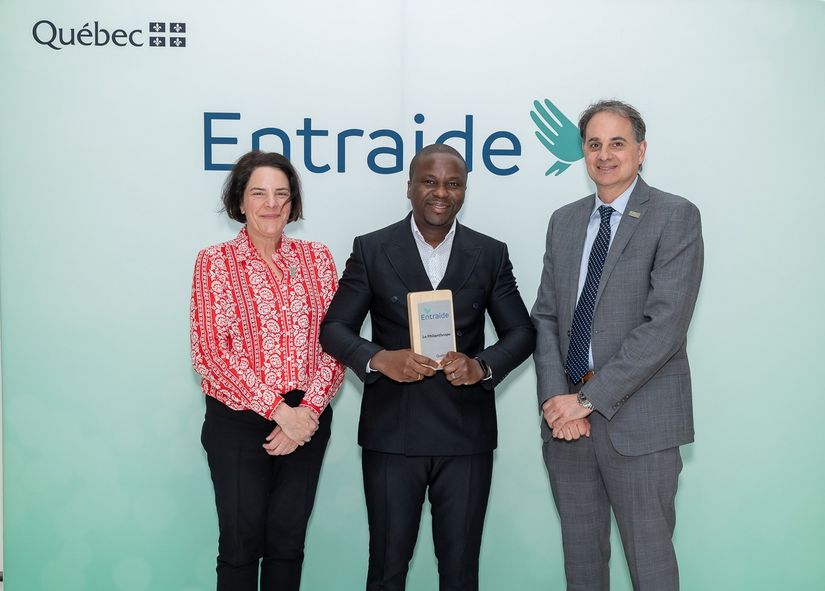
  • Recipient of the Le Philanthrope Award, Distinction category (Entraide 2025 campaign), for leading the Entraide campaign at the Management Board; award received at the Quebec National Assembly.
Ulrich Djidonou holding the Le Philanthrope Award, Distinction category, Entraide 2025 campaign
Presentation of the Le Philanthrope Award, Entraide 2025 campaign.

Quebec Ministry of Finance (MFQ)

Economist (internship, student job) | May 2020 to March 2024, part-time

  • Applied economic research and data analysis across multiple assignments.
  • Forecasting, causal inference, and program evaluation combining machine learning and econometric methods.
  • Contributed to the development of an artificial intelligence project following a proof of concept.

National School of Public Administration (ENAP)

Teaching Assistant, graduate level | September 2023 to April 2024, part-time

  • Teaching statistics and econometrics at the master's level (M.P.A.).

University of Sherbrooke (UdeS)

Positions

  • Doctoral researcher.
  • Bachelor's-level instructor: principles of optimization applied to economic analysis.
  • Research assistant: assessment of the socioeconomic impacts of biofertilizer use among female farmers in Algeria (survey design, well-being and gender analysis).
  • Mitacs Globalink mentor for five international research interns from India, France, and Mexico.
Education

Academic background

University of Sherbrooke

  • PhD-level coursework and comprehensive exams, Economics

University of Abomey-Calavi

  • Master of Science (MS), Applied Economics

University of Abomey-Calavi

  • BSc, Economics
Methodology

A four-step work process

  1. Formulate the question. Clarify the economic, institutional, or strategic problem.
  2. Build the evidence. Select the appropriate data, methodology, and validation techniques.
  3. Make the analysis actionable. Produce a dashboard, model, report, pipeline, or interactive tool.
  4. Communicate. Clearly explain what the results show, what they do not show, and what decisions they enable.

This approach has been applied in public projects, from the ICIE index to the La Frontière monitoring initiative.

FAQ

What exactly does an economist do, what tools I use, what languages I work in: the answers are on the frequently asked questions page.